01 · Pathways
Working & immigration
Compare work permits, Express Entry and regional programs in plain language.
The main pathwaysWhether in construction, electrical work, metalwork or other practical occupations, your training and experience can open up opportunities in Canada. The options that suit you depend on the region, your qualifications, language skills and the requirements for working and immigrating.
Here you will find a clear introduction, with official sources and room for your further questions.
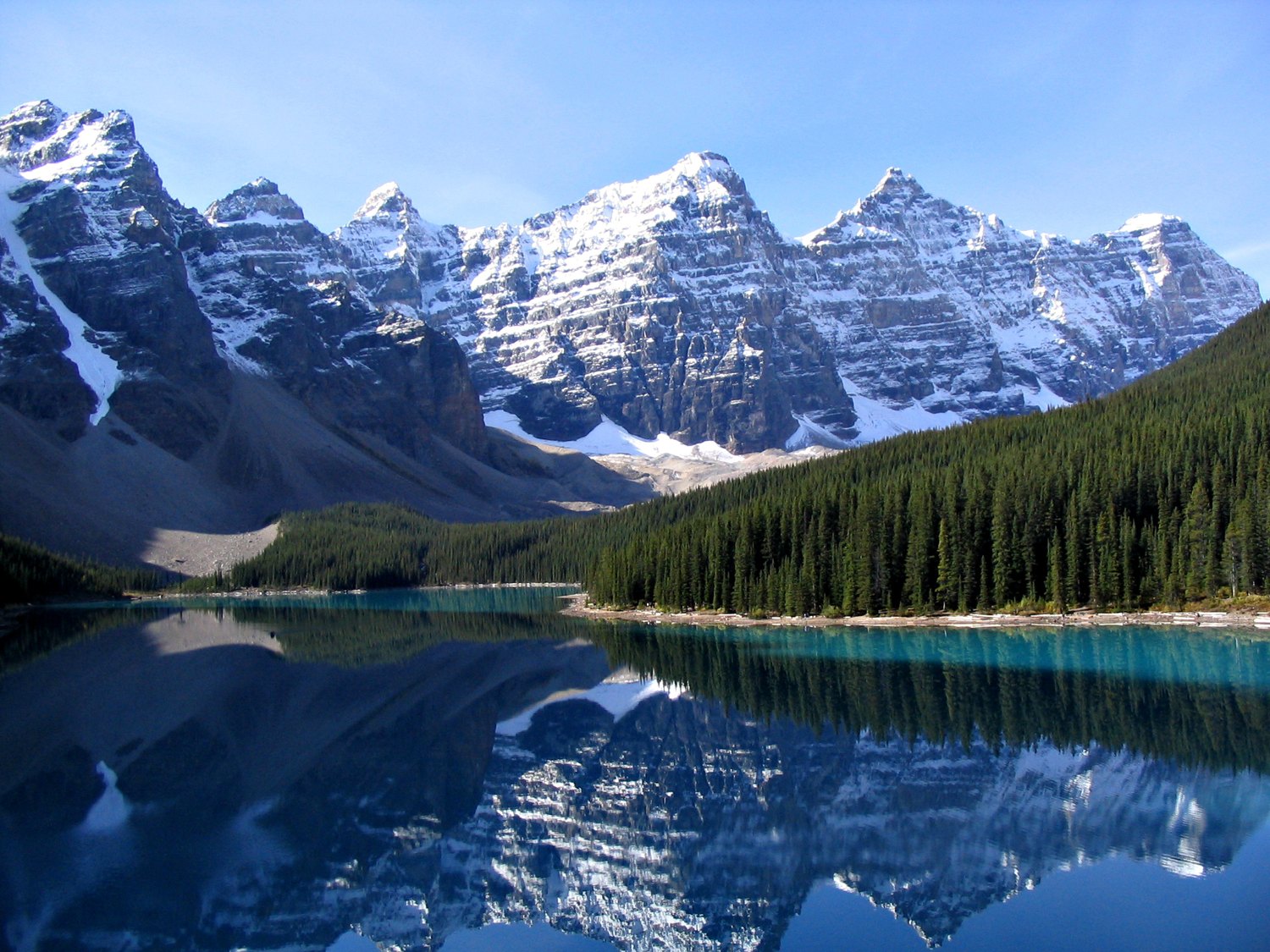
A job opportunity, a work permit and permanent residence are different things. Our information helps you connect the requirements with your own plans.
Compare work permits, Express Entry and regional programs in plain language.
The main pathwaysDistinguish credential assessments, professional licensing and the right language tests.
Prepare your evidencePlan housing, your budget, family needs, healthcare and arrival together.
Think through your moveAva helps you explore further questions about Canada. A voluntary, free professional profile also lets you stay reachable for suitable job opportunities.
An overview of ten provinces and three territories. Consider language, lifestyle, professional requirements and your budget together.
The Pacific coast and the Rocky Mountains.
Compare coastal and inland areas separately; consider where you would live, your work and transport needs.
Rocky Mountains; natural resources, energy and innovation.
An urban or rural setting? Which work suits you, and what licensing is required?
Prairies; agriculture, minerals, energy and manufacturing.
Does the setting suit your plans? What requirements apply to the specific program?
Central location; agriculture, manufacturing and hydropower.
Consider your preferred location and personal connections; check the requirements of the relevant stream.
Ottawa and Toronto; a diverse economy.
Compare major cities with other areas; consider your budget, commute and occupational requirements together.
French-speaking culture; technology and manufacturing.
Look more closely at French language skills and the province’s own selection procedures.
Officially bilingual: English and French.
Which language is needed where you plan to live? Check the provincial program and any Atlantic pathway separately.
Atlantic coast; marine technology, logistics and digital industries.
Compare locations and daily life; for the Atlantic pathway, check for a suitable job offer.
The smallest province; agriculture, fishing and tourism.
Check the specific location and employment conditions; access to the AIP requires the relevant conditions to be met.
The eastern edge of North America; marine technology.
Distinguish the island from Labrador; check accessibility and the specific work involved.
Northwest Canada; mining and construction.
Check distances, services, housing and conditions at the actual work location.
Northern Canada; natural resources and energy.
Examine the specific community, travel routes, services and current program status.
An Arctic territory with Inuit culture.
Check the particular local living conditions; do not assume a PNP pathway exists.
PNP: Provincial Nominee Program. Requirements differ by stream; a genuine intention to settle matters. Québec has its own selection procedures. Nunavut has no PNP.
AIP: Atlantic Immigration Program for the four Atlantic provinces. It requires a suitable offer from a designated employer and further conditions to be met.
The economic descriptions provide regional context, not a promise of a job or a statement about your personal immigration eligibility. Current program openings must be checked separately.
EduCanada: regions · IRCC: provincial programs · IRCC: Atlantic program · Québec: immigration
Distinguish pathways and requirements, from an initial job offer to permanent residence.
If you want to work and live in Canada, consider three questions separately: Is there a suitable job opportunity? Under what conditions may I work? Which pathway could lead to permanent residence?
| Term | What it means | What else to check |
|---|---|---|
| Job offer | An employer offers you a specific job. | Whether the offer meets the requirements of your chosen process and whether you are permitted to do the work. |
| Work permit | A temporary work authorization with specific conditions. | Employer, occupation, location and other conditions, as well as validity. [1, 2] |
| Permanent residence (PR) | Permanent resident status following a successful immigration application. | Pathway requirements and the government’s decision; a job or nomination alone is not enough. [4, 9, 12] |
A work permit does not automatically lead to PR. Likewise, entering an immigration pool or receiving a provincial nomination does not, by itself, authorize you to start work. [4, 9]
IRCC distinguishes two basic types of work permit. Which one may be available depends on your eligibility. [1]
An employer-specific work permit requires a job offer. You must follow the permit’s conditions, for example concerning the employer, occupation or location. The employer must also determine whether a Labour Market Impact Assessment (LMIA) is needed or an exemption applies, and complete the necessary steps. [2]
An LMIA is a labour market assessment relating to the employment of a foreign worker. A positive LMIA does not replace a work permit. An LMIA exemption also does not automatically mean you can work without a work permit. [1, 2]
An open work permit does not require a job offer and permits work for most compliant employers. However, it is available only to people in specific circumstances. It is therefore not a general pathway for everyone who wants to look for work in Canada. [1]
Before starting work, check that you are actually authorized. If you change employers, review the applicable permit conditions and the appropriate process again. Ava can consult the relevant official sources and highlight points that still need checking.
The following overview introduces important economic immigration pathways. It is a starting point, not a complete list of all Canadian programs. Family-related and other specific pathways are considered separately when relevant questions arise.
| Pathway | General guidance | Job offer? | What to check |
|---|---|---|---|
| Federal Skilled Worker Program (FSWP) | Skilled work experience abroad or in Canada. | Generally not required. | Check work experience, language, education and the program’s own selection grid. [3, 5] |
| Federal Skilled Trades Program (FSTP) | Skilled experience in certain trade and technical occupations. | A valid full-time job offer for a total of at least one year, or a Canadian Certificate of Qualification in the relevant trade. | Check the occupation, recent experience and other requirements; a foreign qualification does not automatically replace the Canadian certificate. [6] |
| Canadian Experience Class (CEC) | People with eligible Canadian work experience. | Not required. | Check whether the experience gained in Canada qualifies and which language requirements apply. [3] |
| Provincial Nominee Program (PNP) | People whose profile matches a provincial or territorial program stream. | Depends on the specific stream. | Check current provincial rules, availability and genuine intention to settle; a separate federal decision follows. [8, 9] |
| Atlantic Immigration Program (AIP) | People interested in the four Atlantic provinces. | A suitable offer from a designated employer is required. | Check other requirements, the settlement plan and provincial endorsement. [10–12] |
The AIP covers New Brunswick, Nova Scotia, Prince Edward Island, and Newfoundland and Labrador. Provincial endorsement under the AIP is different from a PNP nomination. [10–12]
Québec has its own selection procedures. If you want to settle there, check the relevant pathways. The federal skilled worker programs managed through Express Entry generally require an intention to settle outside Québec. [5, 13]
Express Entry is IRCC’s online system for managing applications under the FSWP, FSTP and CEC. Your profile must first meet the requirements of at least one of these programs. [3]
Eligible profiles enter a pool and are assessed using the Comprehensive Ranking System (CRS). Entering the pool does not guarantee an invitation. Only after receiving an invitation can you submit the corresponding application for permanent residence; that application is also assessed. [4]
The FSWP also has its own selection grid for assessing eligibility for the program. These selection points are different from the CRS points used to rank profiles in the pool. [5]
A job offer may still matter for a pathway’s requirements. However, IRCC removed the regular additional CRS points for job offers on March 25, 2025. It would therefore be incorrect to claim that an offer automatically gives the former points bonus. Special cases must be checked against current detailed rules. [7]
For individual guidance, your occupation, documented experience, language, education and other personal circumstances matter. Demand for an occupation alone does not establish immigration eligibility. Relevant selection rounds or categories must be checked for current information before an answer is given.
A Provincial Nominee Program may be an option if your profile matches a current stream. There are processes through Express Entry and outside Express Entry. For the Express Entry pathway, both provincial requirements and a federal program’s requirements must be met. [8]
Check the actual conditions in your target province: Which profiles are considered? Is the relevant stream currently available? What evidence and, where applicable, job offer are required? Your settlement plans must fit the pathway you choose.
A nomination replaces neither the federal decision on PR nor a work permit needed while the application is being processed. [9]
The AIP requires a suitable job offer from a designated employer. Further criteria include work experience with certain exemptions, education, approved language tests, funds where required, and a settlement plan. [10]
Designation means the employer is approved to participate in the program. There are also requirements for the specific offer and provincial endorsement. Only after these steps is the complete PR application assessed through the prescribed process. None of these individual stages guarantees residence on its own. [11, 12]
You do not need to know every program in detail immediately. Answering the following questions helps you get an initial overview:
These details help narrow down pathways and identify unanswered questions. Next steps should follow from the relevant process. Language, credential assessments and professional licensing are covered in their own information section.
The general information is available without registration. A future free trust7 profile is intended to help us find interested people again when a suitable opportunity arises. It is not registration with IRCC or an immigration application.
Ava explains terms, organizes your questions and can consult relevant official sources. She can help identify key requirements and the next points to check. The competent authority makes the binding decision.
If you use paid individual immigration advice or representation, check the required authorization. IRCC makes clear that other forms of compensation also count and that representation does not guarantee approval. [14]
General guidance does not require login details for government accounts or complete identity or financial documents.
Source review date: October 3, 2026. Check current individual requirements again before making a decision.
| Source | Use |
|---|---|
| [1] IRCC – Which work permit? | Types of work permit and specific eligibility requirements. |
| [2] IRCC – Employer-specific work permit | Conditions, employer preparation, and LMIA or exemption. |
| [3] IRCC – Express Entry: compare programs | Three core programs and their main differences. |
| [4] IRCC – Express Entry: profile and pool | Distinguish eligibility, ranking and invitation. |
| [5] IRCC – Federal Skilled Worker Program | Basic requirements and separate selection grid; outside Québec. |
| [6] IRCC – Federal Skilled Trades Program | Suitable offer or Canadian Certificate of Qualification; other requirements. |
| [7] IRCC – Job offers under Express Entry | Program-specific validity and changes to CRS job-offer points. |
| [8] IRCC – Provincial Nominee Program | Pathways through and outside Express Entry; official provincial starting points. |
| [9] IRCC – After a PNP application | Nomination does not authorize work; federal assessment is still required. |
| [10] IRCC – AIP: eligibility | Offer, experience with exemptions, education, language, funds and settlement plan. |
| [11] IRCC – AIP: job offer | Designation and offer requirements. |
| [12] IRCC – AIP: apply for permanent residence | Application and Confirmation of Provincial Endorsement. |
| [13] Gouvernement du Québec – Permanent immigration | Official starting point for its separate selection procedures. |
| [14] IRCC – Choose a representative | Authorization for paid representation; no guarantee of approval. |
Prepare the right evidence for the right purpose.
People who want to work in or immigrate to Canada often already have vocational training, a degree and work experience. Preparation depends on knowing which evidence is required for which purpose.
An immigration assessment answers a different question from professional licensing. Similarly, a language test’s requirements differ from the language tasks of everyday work. It helps to separate these questions from the outset.
| Question | What it concerns | Where to start |
|---|---|---|
| How is my qualification assessed for immigration? | An Educational Credential Assessment (ECA), where required. | Requirements of the chosen immigration pathway. [1] |
| May I practise my occupation or use a protected title? | Regulation and required licensing. | The authority responsible for your occupation and target province. [2–4] |
| How do I prove my language skills? | An approved test and program-specific requirements. | Current language requirements for the relevant process. [5] |
| How do I describe my work experience? | Actual duties and the appropriate occupational classification. | The official NOC description and supporting evidence. [7] |
An ECA assesses a foreign credential and its Canadian equivalent. Express Entry requires an assessment for immigration purposes. For education obtained abroad, it is particularly relevant for principal applicants under the Federal Skilled Worker Program or for education points. [1]
The assessment must come from an organization or professional body currently designated by IRCC. Before commissioning it, check which body is responsible for your case and which documents it requires. [1]
An ECA guarantees neither a job nor licensing in a regulated profession. Licensing must be addressed separately. [2]
For Express Entry, the ECA must be less than five years old both when creating the profile and when submitting the application. [1]
Our preparation recommendation: Record the qualification’s title, country of education, institution and completion date. Then clarify its intended purpose. Order translations or assessments only after the receiving body has confirmed its requirements.
For regulated professions and trades requiring certification, the responsible body decides on recognition and licensing. The process depends on the occupation and province or territory. Clarify it before arrival where possible. [3]
Regulation may concern the right to perform certain tasks or use a protected professional title. Non-regulated work has no equivalent statutory licensing requirement, but that does not imply an employer will offer you a job. [4]
Start with the official recognition tool or the CICIC directory. For a specific decision, the requirements of the responsible body identified there then apply. [3, 4]
Questions for that body: What training and experience are assessed? What documents, exams or further steps are required? What can be completed from abroad? What fees apply, and what work is permitted during the process?
We do not promise blanket recognition of foreign qualifications. The specific credential, occupation and applicable process are what matter.
Express Entry requires approved language tests. English: CELPIP-General, IELTS General Training or PTE Core. French: TEF Canada or TCF Canada. IELTS One Skill Retake is not accepted for Express Entry. [5]
Speaking, listening, reading and writing are assessed. Results are mapped to CLB for English and NCLC for French. Minimum requirements vary by program and must be checked for each ability. [5]
Express Entry test results must be less than two years old when creating the profile and submitting the PR application. Other processes may have their own rules. [5]
Our preparation recommendation: First choose the intended pathway, then check the test, version and required result. Plan preparation, the test date and any retake so that your evidence remains valid when needed.
An immigration test is only one part of preparing for daily life. Also practise conversations, understanding instructions and writing in situations relevant to your new life. A particular job or professional licence may have additional requirements; check these separately.
Canada’s National Occupational Classification (NOC) describes occupational duties. Check whether the main duties in the description match your actual work. A similar-sounding job title alone is not enough for a reliable classification. [7]
Our preparation recommendation: Create a factual overview of your work: dates, working hours, duties and available evidence. The documents required then depend on the specific process.
Occupational classification neither automatically evaluates your qualification nor grants professional licensing. It helps classify the work performed correctly within the relevant process.
A Red Seal Endorsement is added to a provincial or territorial certificate of qualification and confirms that the corresponding interprovincial exam has been passed. Certification and provincial or territorial responsibility must still be checked. It is not a universal credential for all occupations or an immigration status. [6]
You do not need to upload complete certificates for initial guidance. Using the essential details, Ava helps you identify the right questions and official bodies.
The information remains available without registration. An optional free trust7 profile is planned for future suitable opportunities. It replaces neither language exams nor credential assessments or professional licensing.
Source review date: October 3, 2026. Check current individual requirements again before making a decision.
| Source | Use |
|---|---|
| [1] IRCC – Educational Credential Assessment | Credential assessment, purpose, responsible organizations and validity. |
| [2] IRCC – ECA and professional licensing | An ECA does not replace licensing in a regulated profession. |
| [3] ESDC – Recognition of foreign qualifications | Responsible body in the target province and recognition process. |
| [4] CICIC – Regulated and non-regulated occupations | Directory as a starting point; distinguish the right to practise from a protected title. |
| [5] IRCC – Language tests for Express Entry | Approved test versions, CLB/NCLC, abilities and validity. |
| [6] Red Seal – Program and endorsement | Endorsement on a provincial/territorial certificate; check provincial certification separately. |
| [7] IRCC – Find your NOC | Occupational classification based on duties; official search result checked. |
Think through housing, family, healthcare and your budget for daily life.
A job prospect or potential immigration pathway is an important starting point. But daily life also matters to your decision: Where would you like to live? What budget will you need? How can your family join you? And how does healthcare work?
This page helps you organize your preparation. Details depend on your location and immigration status. Some questions need to be clarified separately for each household member.
Compare possible locations against your daily needs: distance to work, school journeys, shopping and available transport. Suitable housing must fit your household and your budget.
CMHC, Canada’s housing agency, provides information for newcomers on renting and buying. Use it as a starting point and also check the rules of your target province. [3]
Our preparation recommendation: For a rental offer, clarify total costs, lease length, included utilities, permitted occupancy and, if relevant, pets. Check local rules on deposits and termination. Pay only when the offer, contract and payment recipient can be verified.
If you plan temporary accommodation, include its cost and duration in your plan. A statistical average rent is not an offer for the particular home you need.
Living costs vary by destination. Check expected expenses where you actually intend to live. [1]
The government’s proof of funds is a minimum requirement for the relevant pathway. It does not mean that amount will fully cover your own move and initial period.
The following table is an editorial checklist, not an official cost schedule. Fill in all amounts individually in Canadian dollars.
| Area | Possible costs | Planning considerations |
|---|---|---|
| One-off preparation | Application fees, language test, credential assessment, translations and, where needed, professional licensing | Include only items actually required by your chosen pathway. |
| Travel and arrival | Flights, luggage or shipping, temporary accommodation, any permitted rental deposit and furnishings | Check due dates and local contract conditions. |
| Ongoing household costs | Rent, energy, food, phone/internet, transport, insurance and personal expenses | Research your destination; check what the rent includes. |
| Family | Childcare, school supplies, transport, possible school fees and insurance | Check status and local rules; count on a second income only once work authorization is confirmed. |
| Transition reserve | Time until the first confirmed income and room for delays | Choose the period individually; do not assume a universal statutory number of months. |
Planning calculation: One-off start-up costs + expected household expenses not covered during the transition + a reserve chosen for your situation. Consider when bills fall due and when the first income will actually arrive.
Gross pay is not the amount you can spend. Exchange rates change over time. The period and reserve are personal planning assumptions; we do not set a blanket Canadian minimum for them.
The planned trust7 profile service is free for applicants. Government fees, exams, travel and insurance are separate expenses.
Your own work permit does not automatically authorize your partner to work. IRCC distinguishes several categories. Your occupation, permit type, validity and a possible permanent residence pathway can all matter. [4]
Treat a second income as confirmed only once work authorization and the actual start of work are established. The immigration status of each accompanying family member must also be checked.
For minor children, it matters whether they are still outside Canada or already there. For planned schooling of six months or longer, they generally need to apply for a study permit before entry. This also applies to children accompanying parents who apply for a work or study permit; in that situation, the child’s application does not require a school’s letter of acceptance. [5]
For minors already in Canada, certain exemptions from the study permit requirement exist, for example depending on a parent’s authorization to work or study. These exemptions must not be applied indiscriminately to an application before entry. [5]
Also check locally: School district, registration, required documents, language of instruction, possible fees and childcare options. Immigration permission to study does not automatically resolve all school admission or funding questions.
For younger children, include childcare hours, available places and costs in your preparation. We do not promise a particular place, uniform fee or subsidy without checking the applicable conditions.
Public health insurance plans are administered by the provinces and territories. Before moving, check whether your status makes you eligible, how to register and when coverage begins. Entry into Canada alone does not mean automatic coverage. [6]
The extent of coverage also matters: outpatient medicines, dental treatment and other services may be covered differently from physician or hospital care. Check the relevant public plan and possible supplementary coverage. [6]
If there is a gap before public coverage starts, arrange suitable interim insurance before travelling. Coverage limits and exclusions must fit your personal circumstances. [6, 7]
Prepare important health records, vaccination records and information on medicines you need for your own use. Ava does not need those documents for general guidance. Discuss medical decisions with your treating professionals.
British Columbia’s MSP generally has a waiting period consisting of the remainder of the relevant month when residence is established plus two months. The effective start is determined for MSP and depends, among other things, on immigration status; it need not be the day of entry. Check exemptions and eligibility separately. [7]
Ontario’s official OHIP page states that there is no general waiting period. Eligibility requirements still have to be met there. [8]
Consider how you will reach work, school and services at your destination. If you need a car, include vehicle costs, insurance and other ongoing expenses in your budget.
Temporary use of a foreign driving licence and possible exchange depend on the province or territory. Check deadlines and evidence requirements there; a foreign licence is not valid indefinitely. [10]
You also need a Social Insurance Number (SIN) to work. Applying through Service Canada is free. A SIN does not replace a work permit. [9]
You do not need to provide a CV or sensitive documents for initial guidance. Ava helps organize your questions and can consult the relevant official sources.
Source review date: October 3, 2026. Check current individual requirements again before making a decision.
| Source | Checked in this review |
|---|---|
| [1] IRCC – Financial preparation | Page read; general living costs and local differences. |
| [2] IRCC – Express Entry: proof of funds | Detailed page read; requirements and exemptions. Amounts are not reproduced here. |
| [3] CMHC – Housing for newcomers | Overview read; introduction to renting and buying. Check local rental rules separately. |
| [4] IRCC – Work permits for family members | Detailed page read; different categories and exemptions. No blanket eligibility inferred. |
| [5] IRCC – Minor children and schooling | Detailed page read; distinguish applications outside Canada from exemptions within Canada. |
| [6] IRCC – Healthcare system | Page read; provincial plans, registration and possible coverage gaps. |
| [7] British Columbia – MSP: start date and waiting period | Detailed page read; page dated June 4, 2026. Check individual eligibility separately. |
| [8] Ontario – OHIP and health card | Official search result confirmed: no general waiting period. Direct retrieval failed; detailed requirements not fully checked. |
| [9] Service Canada – Apply for a SIN | Detailed page read; work-related purpose, documents and free application. |
| [10] IRCC – Driving in Canada | Page read; provincial driving licence rules and insurance. |
Explore further questions in conversation.
The website gives you an overview. In conversation with Ava, you can explore your questions and identify which information matters for your situation. For Canada questions, Ava can retrieve current official sources; if verification is unsuccessful, she says so.
General information is free and available without signing up.
Talk to Ava about CanadaWhich regions should we compare more closely as a family?
Do I need a job offer for my pathway?
What is the difference between my credential assessment and professional licensing?
What should we include in our budget for the initial period?
Make your experience visible. Stay reachable for suitable opportunities.
Whether you work in a trade, a technical profession, healthcare, logistics or another field, share your training and experience so trust7 can contact you about a suitable opportunity. People living in different countries can create a profile.
Describe your occupation, training, practical duties and experience. Add your language skills, preferred region and possible timing.
After submitting, you receive an email. Open the link and confirm your address. Only then does your profile appear in trust7’s protected administration.
A personal access link sent by email lets you edit your profile, download the profile data you supplied or delete your profile.
A CV is optional. You may add a PDF file up to 5 MB. Please do not submit identity, health or banking documents.
Registration is free. You can still use our Canada information and Ava without a profile. The applicant form and profile management are available in German, English and Spanish.
When a suitable job opportunity arises, trust7 can find relevant profiles and contact interested people. Registration does not guarantee a job, immigration or regular personal advice.
Profiles and CVs are not public. Only trust7 staff have access to the administration. Before sharing your data with an employer, we obtain separate consent.
Confirmed profiles are kept for 365 days after verification or your latest update and then automatically deleted. You can delete your profile sooner and thereby withdraw your consent. Protected backups are removed within 14 days.
Privacy notice for the profile service
Questions or help with your profile? Email contact@trust7.com.